
ECOWAS and the AfCFTA
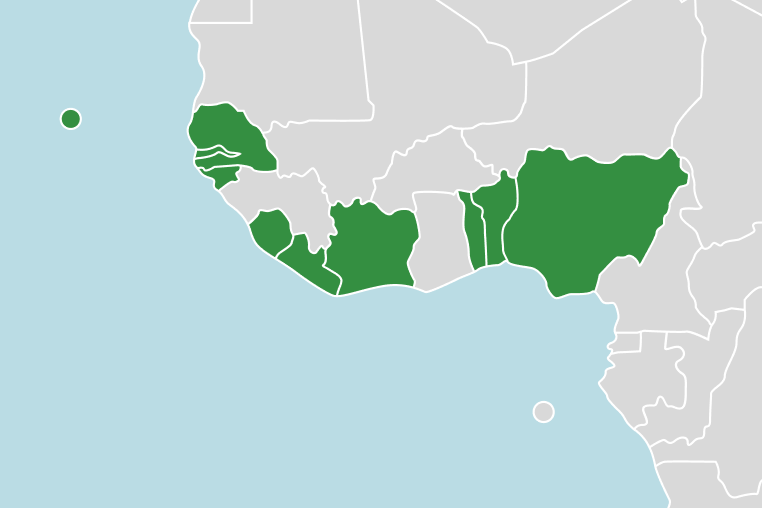
The African Continental Free Trade Area (AfCFTA), under which trading began in January 2021, seeks to create a major economic and technological transformation across Africa’s 54 countries (all AfCFTA signatories) at national and regional levels. This transformation is expected to come through using and adding value to Africa’s diverse resources, within the context of deeper regional integration.
The AfCFTA seeks to address Africa’s development challenges by progressively moving from the continent being driven by unskilled labour and natural endowments to an investment- and efficiency-driven approach, and ultimately to a high level of growth driven by knowledge, innovation and business sophistication.
Currently, trade among African countries accounts for 14.9% of their total trade, according to the African Export-Import Bank’s 2024 African Trade Report.
This figure is considerably lower than that of trade within other regions or continents, including Europe and North America, which have intra-regional trade rates of over 60%. The United Nations Economic Commission for Africa estimates that the AfCFTA could increase trade among African countries by as much as USD55 billion – a jump of more than 75% from current levels – by 2045.
The AfCFTA is expected to boost the GDP of the Economic Community of West African States (ECOWAS) to approximately USD3.3 trillion by 2043, which represents an increase of about USD1.3 trillion compared to the current trajectory, according to the Institute for Security Studies.
The institute anticipates that by 2043, ECOWAS’s manufacturing sector will see gains of approximately USD110.3 billion, while the services sector could benefit by about USD397.6 billion, compared to current projections. This growth will be driven by enhanced demand and reduced costs for raw materials, promoting local industries.
ECOWAS is actively preparing for full AfCFTA implementation through a series of strategic initiatives aimed at enhancing regional integration and economic cooperation among its member states.
These include developing an ECOWAS implementation strategy and building capacity within the region’s member states. The ECOWAS-ITC SheTrades AfCFTA project has been instrumental in training women traders across several member states, reflecting a commitment to ensuring gender inclusivity in trade initiatives.
GIZ’s assistance to ECOWAS focuses on enhancing the institutional and regulatory frameworks necessary for successful trade integration among the region’s member states.
Here are the key areas of GIZ’s support:
Technical assistance and capacity building
To support trading under the AfCFTA, GIZ arranges technical assistance to the ECOWAS Commission, relevant ministries and local agencies. This includes direct support for developing regional policies and implementing necessary measures for AfCFTA compliance. GIZ also conducts training sessions for members of AfCFTA implementation committees and government agency employees, equipping them with the skills needed to effectively execute their roles in the AfCFTA framework
Enhancing coordination and negotiation
GIZ collaborates with ECOWAS to help member states find common negotiating positions in AfCFTA discussions
Developing an implementation strategy
GIZ is assisting ECOWAS in creating a common AfCFTA implementation strategy, tailored to the specific needs and challenges of member states to facilitate smoother integration into the continental market
Trade information access
GIZ supports the development of user-friendly trade information portals at ECOWAS and member state levels. These portals aim to provide up-to-date information on trade regulations. GIZ is also collaborating with ECOWAS on raising awareness among private sector participants about the opportunities presented by the AfCFTA
Developing a regulatory framework
GIZ is working with ECOWAS to improve the regulatory frameworks necessary for AfCFTA implementation. This includes addressing existing gaps in trade facilitation, customs processes and legal standards that hinder effective regional integration
Through these comprehensive efforts, GIZ is playing a crucial role in strengthening ECOWAS’s capacity to implement the AfCFTA, thereby promoting greater economic integration and trade facilitation across West Africa.
Facts and figures
The AfCFTA will help ECOWAS member states boost their intra-African trade.
Total intra-ECOWAS trade increased by an average of 18% per year between 2005 and 2014.*
As of recent estimates, total trade within ECOWAS is approximately USD208.1 billion, with a significant portion directed towards external markets*
*African Trade Report 2023
Our partners in ECOWAS
Political partner: ECOWAS Secretariat
SADC and the AfCFTA
The Southern African Development Community (SADC), comprising of 16 member states1, is one of the eight regional economic communities (RECs) recognised by the African Union as building blocks for the African Economic Community. It. SADC was established in August 1992 in Windhoek, Namibia, and is committed to regional integration and poverty eradication through economic development and ensuring peace and security.
The region has been implementing a free-trade area since 2008, through the SADC Protocol on Trade (STP). The region’s integration effort is guided by the Regional Indicative Strategic Development Plan 2020-2030, which is a comprehensive framework guiding the regional integration agenda.
The SADC Protocol on Trade in Services, which entered into force in 2021, plays a pivotal role in promoting regional integration and facilitating trade in services within the SADC region. The first round of sectoral negotiations currently covers six sectors (communication, financial services, tourism, transport, construction, energy-related services) and negotiations on the remaining sectors are yet to commence.
To fully leverage the advantages of the AfCFTA and effectively support its implementation processes, the private sector must make informed decisions to harness the benefits offered by the agreement, while at the same time navigating through the challenges that may arise during its implementation.
All SADC member states have signed the African Continental Free Trade Area (AfCFTA) agreement, though it has not been ratified by all. Although AfCFTA negotiations are member states-driven, the SADC Secretariat has a role in coordinating member states in AfCFTA processes to ensure the agreement builds on SADC principles, taking into consideration the rights and obligations in the STP.
Challenges to implementing the AfCFTA in SADC
The EAC Secretariat has embarked on capacity building and awareness creation for all stakeholders on the provisions and opportunities of doing business under the AfCFTA.
However, the business community in the EAC requires more than the historical background, legal text and potential impact of the AfCFTA. It needs to know what it takes to trade under the AfCFTA; the details of offers made by respective partner states in the EAC region; the actual demand in the markets offered through the agreement; and logistical requirements. The AfCFTA’s trade opportunities have to be translated into what makes business sense.
There has been considerable progress in the EAC region regarding the AfCFTA, with input from the GIZ. So far, a joint offer for trade in goods and an initial offer for trade in services have been developed and submitted to the African Union Commission. And capacity building has been facilitated among customs officials and the private sector to foster a clear understanding of the offers made, market demand and other requirements.
Niger’s full participation in intra-African trade as well as the implementation of the agreement pose challenges that are both multifaceted and complex for the country.
Indeed, to take full advantage of the AfCFTA, Niger must respond to the following challenges:
The GIZ programme in the SADC focuses on five thematic areas:
Strengthening the steering and coordination capacities of AfCFTA negotiation and implementation
Facilitating trade-in-services negotiations
Supporting the implementation of obligations under trade in goods
Promoting socially, ecologically and economically sustainable realisation of the AfCFTA
Supporting preparation for Phase II negotiations
The programme also supports the active involvement of the private sector and civil society in the implementation of the AfCFTA. It works
across three levels: continental, regional and national.
At the regional and national levels, the programme provides support to three RECs – the East African Community, Economic Community of West African States and SADC – as well as 10 AU member states.
Expected programme results
The expected results are:
Facts and figures
The AfCFTA will help SADC boost its intra-African trade, which it is intent on growing.
In 2019, the total merchandise trade of SADC stood at USD 362.43 million, with intra-SADC merchandise trade at USD 81.27 million and extra-SADC merchandise trade at USD 281.15 million*
China was SADC’s main trading partner for exports*
SADC chiefly imports manufactured products and exports minerals, precious stones and metals, with total merchandise export for the region at USD 181 815 million in 2019
*Provisional statistics *SADC Merchandise Trade Statistics Bulletin for November 2021
Our partners in SADC
Political partner: SADC Secretariat
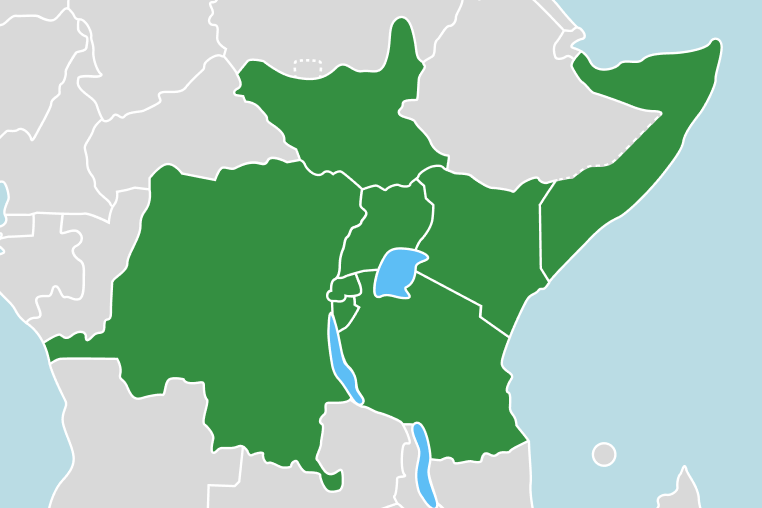
The East African Community and the AfCFTA
The African Continental Free Trade Area (AfCFTA), under which trading began in January 2021, seeks to create a major economic and technological transformation across Africa’s 54 countries (all AfCFTA signatories) at national and regional levels through making use of and adding value to Africa’s diverse resources, within the context of deeper regional integration. It seeks to address Africa’s development challenges by progressively moving from a factor-driven to an investment- and efficiency-driven approach, and ultimately to a high growth level driven by knowledge, innovation and business sophistication.
Currently, trade among African countries accounts for 14.3% (average 2019 to 2021) of their total trade. This figure is considerably lower than that of trade within other regions, including Europe and North America, which have intra-regional trade rates at over 60%. The United Nations Economic Commission for Africa estimates that the AfCFTA could increase trade between African countries by as much as USD 55 billion – an increase of more than 75% – by 2045 from current levels. The estimates also show large potential gains from the AfCFTA, including a projected increase in intra-African exports of Eastern Africa by nearly USD 1 billion and job creation for 500 000 to 1.9 million people. Clearly, that makes the AfCFTA attractive to investment, both from within and outside the continent.
The East African Community’s (EAC’s) trade with the rest of Africa is low. The AfCFTA is expected to directly impact the EAC’s trade relations with Africa, especially countries that are not members of the EAC, the Southern African Development Community (SADC) or the Common Market for Eastern and Southern Africa (COMESA). Together, African economies have a collective GDP of USD 2.5 trillion, making the continent the eighth largest economy in the world. This calls for business people to take advantage of the AfCFTA and make the necessary investments to sustain economic growth and create employment.
How the EAC is preparing the ground for the AfCFTA
The EAC Secretariat has embarked on capacity building and awareness creation for all stakeholders on the provisions and opportunities of doing business under the AfCFTA.
However, the business community in the EAC requires more than the historical background, legal text and potential impact of the AfCFTA. It needs to know what it takes to trade under the AfCFTA; the details of offers made by respective partner states in the EAC region; the actual demand in the markets offered through the agreement; and logistical requirements. The AfCFTA’s trade opportunities have to be translated into what makes business sense.
There has been considerable progress in the EAC region regarding the AfCFTA, with input from the GIZ. So far, a joint offer for trade in goods and an initial offer for trade in services have been developed and submitted to the African Union Commission. And capacity building has been facilitated among customs officials and the private sector to foster a clear understanding of the offers made, market demand and other requirements.
GIZ assistance to the EAC on the AfCFTA focuses on:
Trade in goods
To support trading under the AfCFTA, the GIZ is assisting the EAC to produce a simplified, user-friendly and well-illustrated guide on AfCFTA trade and trade-related rules. Support is also being given to EAC partner states in preparatory work for the implementation of the agreement and finalisation of outstanding negotiations on trade in goods
Trade in services
The programme supports EAC partner states in preparatory work for the implementation of the agreement and finalisation of outstanding negotiations on trade in services (TiS), as well as additional commitments to TiS, including conducting an EAC regional study on TiS for the AfCFTA
Phase I and Phase II issues
The programme supports EAC partner states in their preparatory work for negotiations on Phase II and III issues – especially in the areas of investment, competition and intellectual property rights (IPR) – through a range of mechanisms such as capacity building, undertaking scoping studies, gap analysis studies and development of an EAC IPR strategy
Stakeholder engagement
The GIZ is partnering with the EAC in its efforts to sensitise the business community and general public in advance to ensure that key stakeholders, including small and medium-sized enterprises, effectively participate in and benefit from the AfCFTA to achieve the objective of shared growth across the region and continent. Further, GIZ awareness-raising efforts around the AfCFTA are also targeting civil society and the private sector and engaging with female cross-border traders and traders’ associations
The GIZ also contributes to strengthening the technical and administrative capacities of the EAC Secretariat for it to more effectively play a role in fostering coordinated negotiations on and realisation of the AfCFTA at regional and national levels.
Facts and figures
The AfCFTA will help Ghana boost its intra-African trade, which currently accounts for a relatively small proportion of the country’s imports and exports.
Total EAC trade increased 13.4% to USD 74.03 million in 2022, from USD 65.27 million in 2021, and is partly attributed to improved EAC total exports to the Economic Community of West African States (ECOWAS) region, which increased by 48.5% to USD 136.1 million in 2022 from USD 91.6 million in 2021
Total intra-EAC trade grew by 11.2% to USD 10.9 million in 2022 from USD 9.81 million in 2021
EAC total exports to the rest of Africa increased by 10.4% to USD 8.9 million in 2022 from USD 8.06 million in 2021
Our partners in the EAC
Political partner: EAC Secretariat