
AfCFTA Success Story:
Rwanda businesses: Joel Tuyishime’s journey
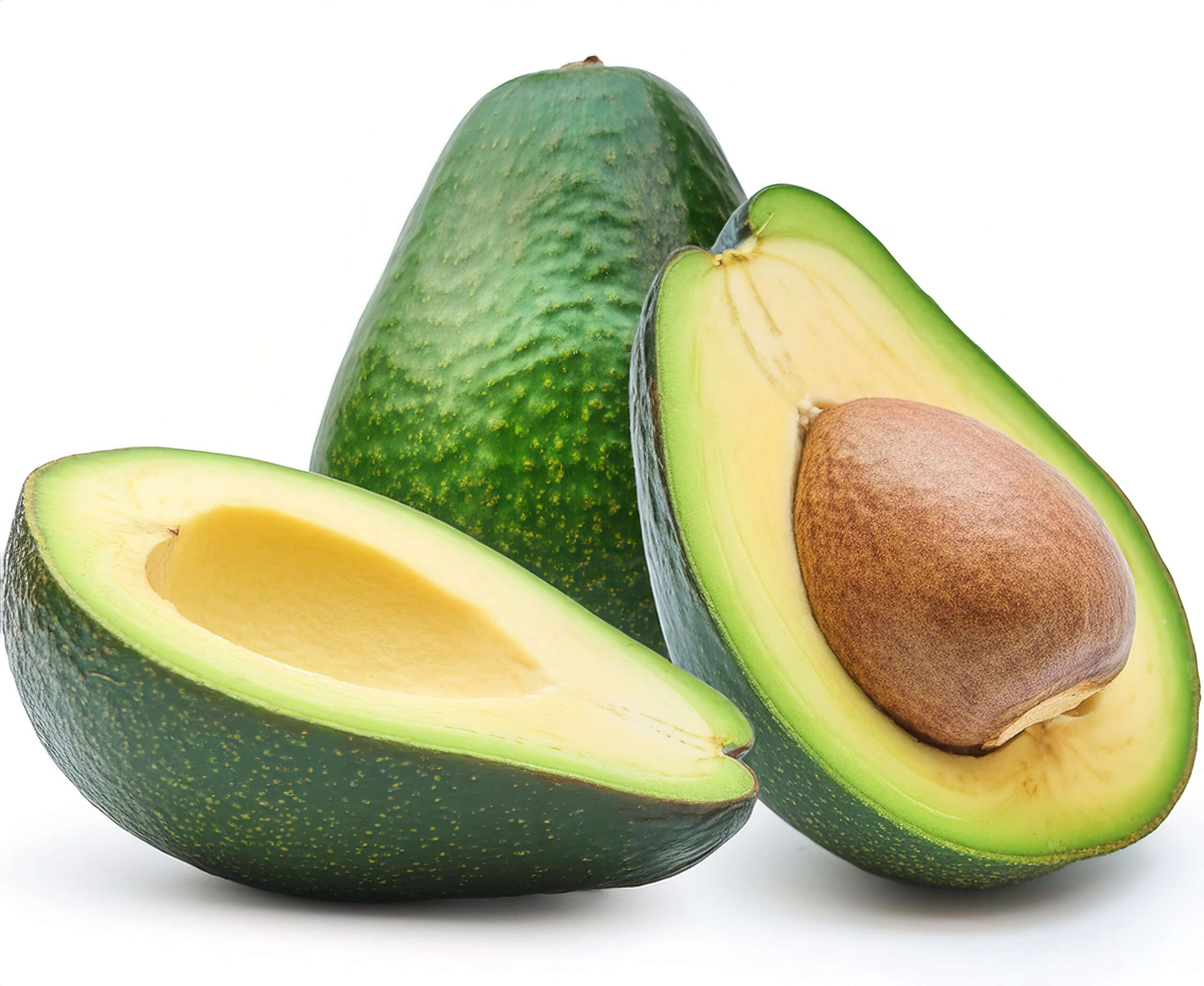
Joel Tuyishime is the CEO of Agri Solution Ltd, a horticulture export company based in Kigali, Rwanda.
Avocados from Africa:
Meet a Rwandan fruit exporter
Joel Tuyishime’s journey into horticulture exports began with avocados. Tuyishime is the CEO of Agri Solution Ltd, a horticulture export company based in Kigali, Rwanda.
“We started horticulture in 2017. At the time, Rwanda produced few products for exportation and the government was [focused] on increasing exportation levels. That’s when I started learning about export. We started with avocados because it was needed in Dubai,” says Tuyishime.
Agriculture is a key economic sector in Rwanda, employing, according to the Rwanda Development Board (RDB), some 70% of Rwanda’s population, and contributing nearly a third of the country’s GDP.
Increasing agricultural exports has been a strategic priority for the Rwandan government. The RDB reports a significant increase due to that effort with the value of horticulture exports rising from $5-million in 2005 to $25-million in 2018.
Tuyishime is one of around 45 horticulture export businesses listed by the RDB, selling fruit cultivated in Rwanda’s fertile volcanic valleys to businesses in the United Arab Emirates and Europe.
Meeting international standards
Tuyishime says the success of his business has come down to investigating demand beyond Rwanda’s borders and working with farmers to raise the quality of their products to meet international standards. Initially, he says, this process was difficult as it involved getting farmers to change how they farmed.
“For instance, if [buyers] want an organic product, we would have to work with an agronomist to show the farmers how to do it, so we got good quality [fruits], which are needed at an international level.
“In the beginning, it was difficult to say, ‘You have to do this, you have to stop doing this.’ But slowly, a few farmers started to understand and wanted to get involved in exportation. We began with five farmers, and now we work with many all over the country,” says Tuyishime.
Tuyishime says they help farmers and cooperatives get bigger yields through improved farming techniques such as radical terraces (which reduce soil erosion), making compost, and providing improved seed varieties and agricultural equipment. And this process is, quite literally, bearing fruit.
More than avocados
Apart from avocados, Agri Solution Ltd now also exports passion fruit, avocado, tamarillo, macadamia nuts, guava, chayote squash, kale, chilli and mushrooms to buyers in the Middle East and Europe. From making just one shipment a month, Tuyishime says the firm currently makes a shipment a week (and sometimes more).
Tuyishime is enthusiastic about the possibility of the African Continental Free Trade Area (AfCFTA).
Time to trade with Africa
“It’s good for farmers if the AfCFTA works. Markets will increase for what they produce, and then it will be easier to trade with our neighbours.”
Tuyishime says the AfCFTA will finally tackle a frustration for businesses like his – that it’s easier and more affordable to get their products to overseas markets than to sell them to neighbouring countries.
“Taxes, the high cost of transportation and the difficulty getting visas to travel to other African countries to understand their needs currently make things difficult,” Tuyishime says.
He hopes leaders on the continent work quickly to implement the AfCFTA, which is expected to reduce these barriers to trade.
“If I or my child or my grandchild can go to another African country to explore opportunities, it will be good. African people and our governments need to work together to help AfCFTA grow, so we can move these barriers.”

AfCFTA Success Story:
AfCFTA will bring unimaginable benefits, says Tunisian businessman

Mokhtar Zannad is the CEO of Aramis, a machinery export company based in Tunis, Tunisia.
AfCFTA will bring unimaginable benefits, says Tunisian businessman
The benefits that the African Continental Free Trade Area (AfCFTA) agreement will bring to Africa’s people and businesses, once it is properly up and running, are almost unimaginable, says Tunisian businessman Mokhtar Zannad, CEO of Aramis, Tunisia.
“It is estimated that by 2050 there will be 2.5-billion people in Africa … Imagine the need for food, fuel, paper,” says Zannad, whose company Nielsen Recycling Solutions develops and manufactures machines used by the recycling industry.
Zannad, an engineer by training, has already experienced the benefits of a similar free trade area agreement. After Tunisia signed the Common Market for Eastern and Southern Africa (COMESA) agreement in 2018, Zannad saw Nielsen’s market broaden because trade between COMESA’s 21 members is exempt from customs duties.
The elimination of customs duties means Nielsen’s machines are very price-competitive in a common market that extends from Tunisia on the Mediterranean to Eswatini, sandwiched between South Africa and southern Mozambique.
In an example of the power of businesses banding together, Zannad says turnover from selling Nielsen machines into the agro-food sector has increased by 90% since a business cluster called Taste Tunisia began operating. Taste Tunisia, which Zannad heads, is an association of Tunisian firms operating in the agro-food sector and its related activities. Member businesses share information and contacts in the sector, helping each other to thrive.
“We [Tunisian businesses] are more effective when we work together in Africa. I went to Nairobi, Kenya, years ago and of eight or nine olive oil brands on the supermarket shelves, only one was Tunisian. I went back a year ago, and now there are 13 olive oil brands on the shelves. All but three are from Tunisia.”
Zannad says that the Deutsche Gesellschaft für Internationale Zusammenarbeit’s (GIZ) support, aimed at coordinating and institutionalising the AfCFTA in Tunisia, has been very important to the country’s private sector. Through GIZ, the Tunisian business sector has learnt to share information and resources when it comes to trade outside of the country’s borders.
This was not natural for businesses that were used to competing in Tunisia’s relatively small market of 12.5-million people and in neighbouring Algeria, with its population of 44-million.
“Through GIZ we learnt that we can be competitors locally, but outside we should work together,” says Zannad.
GIZ has also supported the Tunisian business community by subsidising trade trips to other African countries viewed as prospective markets, and is helping to entrench good business practices such as providing progress reports every three months, says Zannad.
Zannad had his start in the oil and petroleum industries in Nigeria and Algeria in the late 1980s and entered the paper industry as a way of returning to his homeland, Tunisia. There, he established Technopap, a paper technology company that is the oldest Aramis entity.
Ten years later, Zannad started Nielsen because Tunisia’s large paper-making sector produces a lot of paper waste for recycling. Zannad thought that, instead of the general practice of importing paper recycling equipment, from baling machines to de-inking machines, why not design and manufacture them in Tunisia? That way, he could “do big things for the environment and to combat unemployment for young people”. He holds a patent for the first baler that can bind together 14 different products, making it viable beyond the paper recycling industry.
With the potential of the enormous, and growing, African market being strengthened and expanded by AfCFTA’s implementation, the future looks good for Tunisia and Africa, says Zannad.
“Tunisia can and must be the bridge between Africa and Europe, and African countries must work together. That is a passion for me,” he says.
AfCFTA Success Story:
"The AfCFTA can change lives in Zambia"
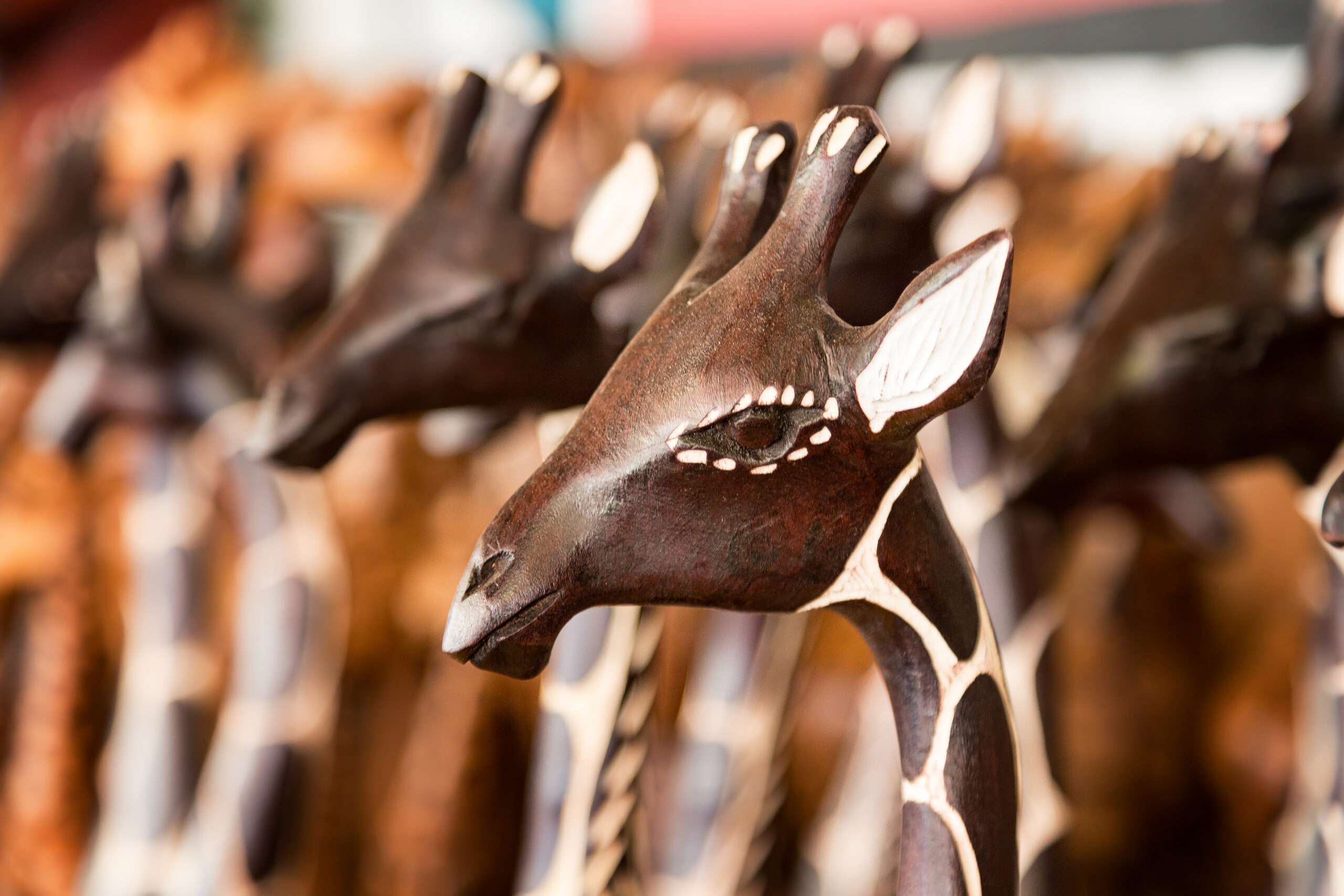
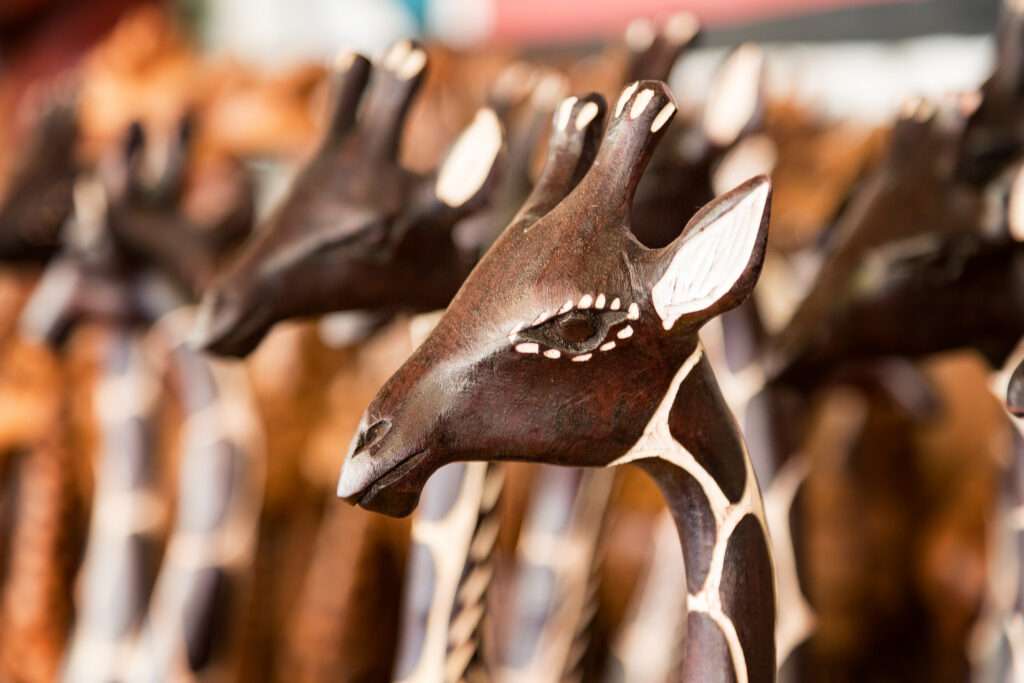
Chananga Bwembya Nkowani is the CEO of Gilly Trends Enterprises, a manufacturer of woodwork, jewellery and clothing based in Lusaka, Zambia.
The AfCFTA can change lives in Zambia, says businesswoman
The African Continental Free Trade Area (AfCFTA) will change lives, says Zambian businesswoman Chananga Bwembya Nkowani, who manufactures woodwork, jewellery and clothing in Lusaka, Zambia.
The AfCFTA is the largest free trade area in the world by number of participating countries, connecting 1.3-billion people across 55 African countries with a combined GDP of $3.4-trillion, as measured by the World Bank in 2020, and the potential to lift 30-million Africans out of extreme poverty by boosting intra-African trade.
“If the AfCFTA works, I don’t expect us African people will remain where we are economically. I employ 10 women. If the AfCFTA works and we are able to trade more easily, I will be able to create more jobs,” she says.
Already, Bwembya is full of ideas on how to expand her business, Gilly Trends Enterprises, started by her mother in 1983 and which she has been running since 2018. She has contacts in Egypt and Ghana, made on a trip to the Intra-African Trade Fair (IATF) 2023 that was sponsored by the Deutsche Gesellschaft für Internationale Zusammenarbeit GmbH (GIZ), with whom she wants to further collaborate.
Gilly Trends Enterprises exports clothing, jewellery made from amethysts mined in a family-owned mine, and woodwork to the United States and China.
“The trade fair [IATF 2023] was a great opportunity for me. Exhibitors from all the African countries were in one place, and I went around and saw what others were doing. It was an eye-opener,” she says.
Bwembya wants to add Ghanaian kente to the fabrics she imports from a number of countries, such as South Africa and Namibia. Gilly Trends Enterprises uses the fabrics to make clothing that is sold in Zambia and exported to the United States.
Bwembya also wants to add Ghanaian gold to the jewellery her enterprise manufactures, which is made with silver and exported, along with wooden artefacts, to China. There are new Egyptian contacts who are also interested in the jewellery.
However, Bwembya notes that cross-border trade among African countries can be surprisingly complicated and bound up in red tape. She hopes the AfCFTA will change this.
If the AfCFTA helps to broaden Bwembya’s business opportunities – she also has her eye on importing shea butter from Ghana – she will have to modernise and partly mechanise her fully handcrafted business. She will also need a larger workforce.
“Zambian life will change. People like me will be able to create more jobs and more people can earn money,” she says. Zambia’s unemployment rate, according to the Zambia Statistics Agency, was 13.8% in 2021.
“I see great opportunities for trade between Ghana and Zambia, and I am always open to opportunity, but there are certain things such as…. that the Zambian government doesn’t allow us to import,” says Nkowani. “I hope the AfCFTA can change that.”
AfCFTA Success Story:
Ghanaian home comforts, from Africa to the world
Rahmat Sai Jimah is the CEO of Chopbox Express, a food manufacturing company based in Accra, Ghana.
Ghanaian home comforts, from Africa to the world
In five short years Rahmat Sai Jimah’s food manufacturing company has gone from making its first-ever sale to exporting Ghanaian home comforts to North America and Switzerland.
In 2019 Chopbox Express was born out of an idea that had been percolating in Sai Jimah’s head for many years. She started an online food store to sell pre-made Ghanaian dishes like hausa koko, a spicy corn or millet porridge; koose, a deep-fried bean cake; and toogbei, a fried dough snack.
Today Chopbox Express employs four staff on a permanent basis, and eight casually. Part of Sai Jimah’s business strategy is to manufacture products on demand and she has interest from clients in Nigeria, but logistics is a challenge. This makes the increasing ease of doing cross-border business as the implementation of the African Continental Free Trade Area (AfCFTA) unfolds very appealing to her.
“I expect the AfCFTA will help. I have exported products to Nigeria, but it took almost a month (for the goods to travel between Ghana and Nigeria). Even using logistics agents it is not easy,” she says, adding that the product she wants to export to Nigeria requires a closed cold chain.
Ghana and Nigeria are both West African countries, whose capital cities, Accra and Abuja, are approximately 1,200km apart. Also, they are members of the Economic Community of West African States (ECOWAS).
The AfCFTA, which came into force on 30 May 2019, aims to create a single continental market and promote industrial development as an engine of growth and sustainable development.
Sai Jimah also hopes that the AfCFTA will help with imports. She wants to buy a spice from Tanzania because it is cheaper there, but the import agent she’s working with is struggling to come up with a logistics plan that will make economic sense.
Policymakers working on the AfCFTA have made good progress on smoothening the transfer of money across borders, says Sai Jimah. “I wish that we could get progress like that, logistics-wise. We need logistics to be accessible and affordable,” she says.
In January 2022, the Pan-African Payment and Settlement System was launched. It is a financial platform that enables instant payment, pre-funding, and net settlement of cross-border transactions among African countries.
It works in conjunction with central banks to allow direct transactions among the more than 40 currencies used across the continent, without relying on intermediary currencies like the US dollar, euro, or pound. This eliminates the significant time lags and substantial costs that were associated with converting between African currencies and third-party currencies.
Sai Jimah adds that she appreciates the help that the Deutsche Gesellschaft für Internationale Zusammenarbeit (GIZ) GmbH has given to business owners in Ghana, through capacity building and awareness creation on the AfCFTA.
The training materials such as links to access trade related materials and a trade map that have particularly helped her, she says.
Sai Jimah received GIZ training on how to use the International Trade Centre’s Trade Map tool, which provides indicators on export performance, international demand, alternative markets and competitive markets, as well as a directory of importing and exporting companies across 220 countries, including African countries.
The idea for Chopbox Express had its beginnings in 2011, when Sai Jimah was trying to wean her baby while also finishing a master’s degree in business administration. Time was short, and she was frustrated when her son refused shop-bought baby food.
Then Sai Jimah’s aunt made up some hausa koko for the baby boy. Sai Jimah was sceptical – that particular Ghanaian street food is known for being spicy. However, the version Sai Jimah’s aunt made was not too spicy and her son loved it so much that Sai Jimah told other young mothers about it, and shared her aunt’s hausa koko with them.
Years later, when Sai Jimah’s niece was studying at university and needed quick and easy meals, the memory of the aunt’s hausa koko came back.
“I had an idea for a store where students could buy provisions,” she says. Brainstorming sessions with her niece, husband and friends led to the idea of an online shop, so that the new business could widen its market to students from many educational institutions.
Sai Jimah was working at Unilever Ghana when she started Chopbox Express, but within three months the data showed that the business was more than just a side hustle. Her family pulled resources together so that a processing plant could be built, and she resigned from Unilever to devote her time to the growing business.
That was December 2019. By July 2020 Chopbox Express had sold its first labelled product and added to its range.
Sai Jimah’s first product, the popular hausa koko, has been developed into a powdered form that doesn’t require specialised logistics. She is keen to sell it across Africa, which would increase Chopbox Express’s annual turnover and allow her to widen her product base even more.
The company – like many – experienced a dip in sales during the years of Covid-19 lockdowns, but business is picking up. “2024 is already better than 2023; I expect it to be a good year,” she says.